
Use Good Words
How To Write Good: A Writer's (Woefully Incomplete) Toolbox

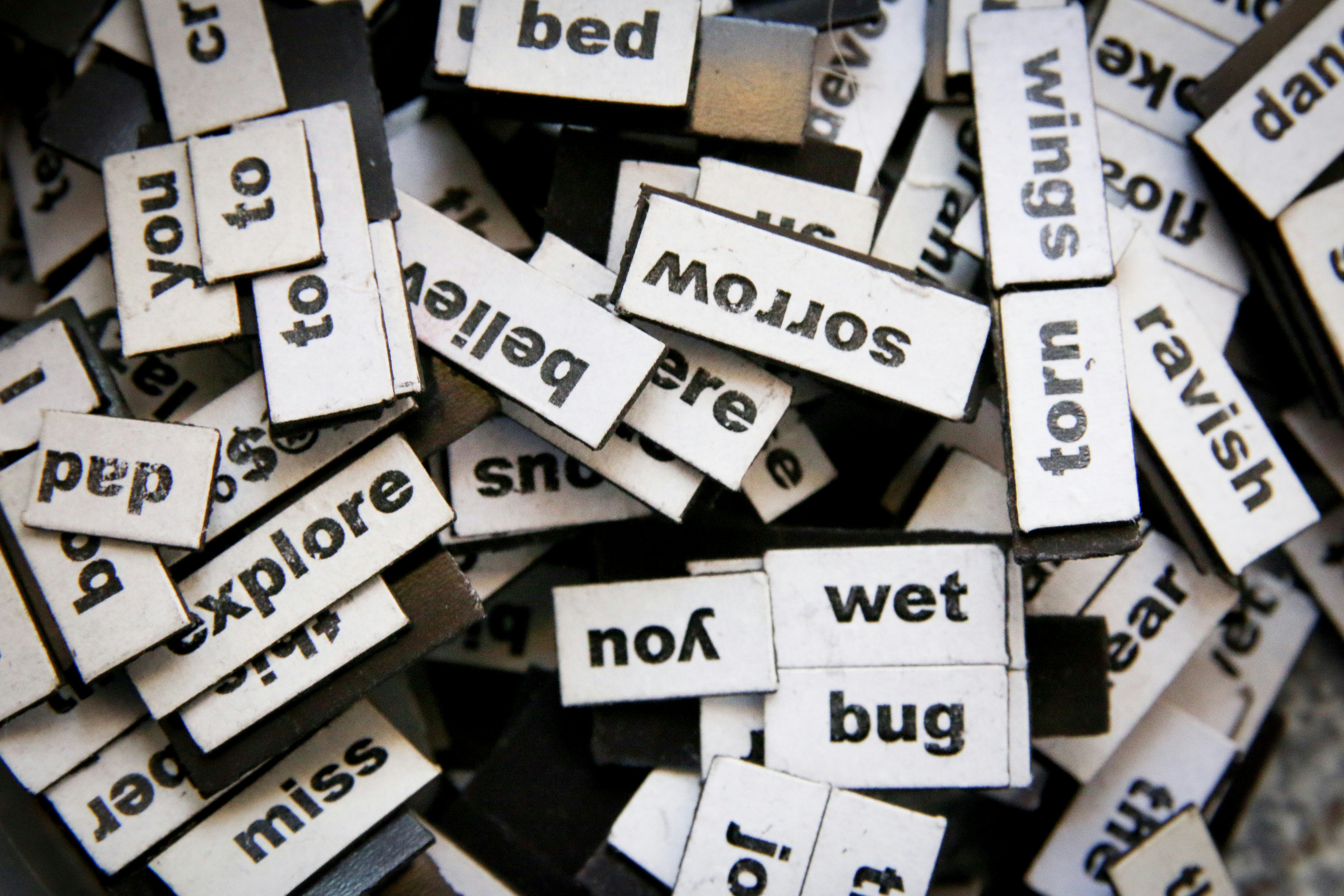
Okay listen. I’m about to give you seven “rules” on how to use good words. Here’s my disclaimer: These are my rules, not yours. Write how you want to. I’m not your dad.
I’ve cobbled together these tips from various writing craft blogs, videos, podcasts, etc. over my relatively short writing career. I try to follow them as much as possible—and sometimes, I don’t.
There are always exceptions to the rules. For example, none of these rules apply to dialogue. We, or at least I, don’t speak correctly, and neither do my characters. So if it’s in quotes, it doesn’t apply. And sometimes, you just like what you wrote even though you know it breaks the rule. So what? Do what you want.
If you want to be a good writer, you’ve got to use good words. And I don’t mean using fancy two dollar bangers like decathect1 or sangfroid2. Don’t be that guy. In fact, if I’m looking for a synonym and see a word I’ve never heard before, I stay far away. Because if I haven’t heard it, my readers probably haven’t either. And I don’t want my readers to have to refer to a dictionary to understand what I’m trying to say.
Let’s make that my first rule of using good words.
1. Only use words you already know
That being said, I definitely use a thesaurus. And here’s why. My vocabulary is shite. I use words like shite. So when I’m drafting, I use my shite vocabulary freely and without shame. But then, when I’m revising, I go through each line and ask myself: Are these the best words for this sentence?
And of course, they’re quite often not. Dollars to donuts, there are better words than what I had so carelessly spewed from my simple mind while I was drafting. So I use a thesaurus to find better words, but I only use the ones I already know so I don’t come across as some literary douchebag.
2. Don’t be redundant
Consider this sentence from my current WIP:
I attempted to make fresh squeezed juice, but the four oranges I had only made a few ounces of juice.
There are two examples in this sentence: make/made and juice. As for make/made, I could change both, but the second one is less accurate. Oranges don’t really make juice, do they? They already are juice—how ontological. So a better word might be . . . yielded. Yes.
As for the word juice, there’s no need to change the second juice to something else, because the reader already knows what the oranges yielded. They didn’t yield motor oil. Take it out. So the sentence changes to:
I attempted to make fresh squeezed juice, but the four oranges I had only yielded a few ounces.
Much better.
The next few rules have to do with streamlining your prose. Generally speaking, you want to say more with less words. We tend to use a lot of clutter words when we speak, which is fine because we’re not necessarily trying to create anything of value when we talk. But when we write, it’s important to make it easier on the reader to get what you’re really trying to say without having to trudge through a lot of unnecessary words.
3. Eliminate clutter words
What are clutter words? Clutter words are words that simply don’t need to be there because the sentence makes perfect sense without them. The first two I’ll mention are that and just.
Here’s an example of each:
She told me
thatI lacked the temperament for polite society.
You don’t need that for the sentence to make sense. Strike it.
I
justwanted to make sure everything was okay.
You don’t need that extra just in there. Now, I’m not saying never use these words. Like if you use just to mean fair, that’s okay. Take them out when the sentence is just as clear without them. (See, here the sentence is better with the just—imo.)
Use the Find/Replace function (whether you’re using Scrivener, Word, Google Docs, etc.) to highlight these words in your manuscript. If the word cannot be eliminated, leave it. Otherwise, you have three options:
Delete it.
Replace it with a better word.
Change the sentence.
The next category of clutter words are those which accompany verbs that already imply direction.
sat
downstood
upreturned
backhomefaded
awaygathered
togetherspread
out
There’s only one way to sit. Sit implies down. Stand implies up. I suppose you could also “stand down.” In that case, leave it in. There’s always an exception.
The music faded
awayas the car drove out of sight.
The family gathered
togetheraround the table.
If the sentence is just as clear without using extra words, delete them.
4. Don’t hedge
If you want your writing to be strong, don’t weaken it with hedge words. Hedge words include: a bit, a little, usually, sort of, kind of, in a sense, probably . . . There are many more.
Nut up and say what you mean.
When he drinks, he can be
kind ofa dick.
Everyone is kind of a dick. That isn’t worth putting into writing. If someone is being a dick, I know what that means. If he’s kind of a dick, that doesn’t really distinguish him from anyone else, does it? Say he can be a dick.
During her morning commute, she
usuallylistens to death metal.
Usually doesn’t add anything important here—it’s implied. If you say she listens to death metal on her commutes, I’m going to assume that’s something she usually does. You don’t need to add another four syllables.
5. Be specific
George Saunders writes a lot about specificity in fiction writing. I could write a whole post about that alone, but for the purposes of this piece, let’s identify certain words that are inherently non-specific.
something
somewhat
anything
everything
stuff
There was something sinister about the way she looked at me.
First of all, there was is never a great way to start a sentence. It says nothing. Whatever follows there was implies that it was there. Consider reconstructing the sentence.
The word something has zero specificity. In this case, the anchoring ideas have to do with the sinister way she looked at me. So I’d recommend changing the sentence entirely to include even more specificity. How about:
Her sinister stare gave me pause.
I just cut that sentence in half and said even more. Now, you not only know how she looked, but also the effect it had on me.
How about this one?
His stuff was everywhere.
Both stuff and everywhere are quite non-specific. Try this.
His apartment was littered with dirty clothes, empty pizza boxes, and piles of unread mail.
You get the idea.
6. Don’t use suddenly
I don’t remember where I learned this one, but it makes a lot of sense. If you set the scene up correctly, you shouldn’t need to use suddenly to announce that something you aren’t expecting is about to happen. In fact, opening the sentence with suddenly actually makes what happens next . . . less sudden.
Suddenly, he heard a loud crash!
Suddenly here effectively delays the suddenness of the loud crash by three whole syllables.
This last example brings me to another category of words that I personally haven’t put much effort into avoiding, but I probably should. These are filter words.
7. Don’t use filter words
Filter words are words that add unnecessary distance between the reader and what the character is experiencing. You’re telling the reader what the character is experiencing instead of showing it. Words like saw, noticed, heard, felt are all filter words. Let’s take a look at the previous example:
He heard a loud crash!
You don’t have to state that the character heard the crash. Because your character was in the scene, we can assume he heard it—it was fucking loud! So instead you might write:
A loud crash reverberated throughout the empty warehouse.
No one is asking: But, did he hear it? Of course he did! And so did the reader—in their minds.
You might notice that I completely left out another category of words that tends to get a lot of hate: adverbs.
“I believe the road to hell is paved with adverbs.”
—Stephen King
Damn. That’s a bold statement. I agree they can be overused. But personally, as a reader, I don’t notice. Then again, I only read good writers, so maybe they don’t use a fuck ton of them. When it comes to adverbs, I think it’s a good practice to ask yourself, if the verb needs to be modified, might there be a better verb? Oftentimes there is. Sometimes, it’s fine.
I don’t mind adverbs so much. It’s not one of my “rules” but if falls under any other category of words that tend to be overused. Ask yourself: Is it absolutely necessary?
So there you have it—my seven “rules” for using good words. Are there other words or categories of words that you try to avoid in your writing? Let me know in the comments.
Decathect (v): To withdraw one’s feelings of attachment from (a person, idea, or object), as in anticipation of a future loss.
Sangfroid (n): The ability to stay calm in difficult or dangerous situations.
The "words that accompany verbs that already imply direction" is a biggee! I've finally reached the point where I recognize these as I write them, instead of having to find and delete them later.
Great tips! I think about all of these during editing/revisions, too. Filter words were a big struggle when I decided to try writing a novel in first person POV specifically. Thank goodness for skilled editors. haha